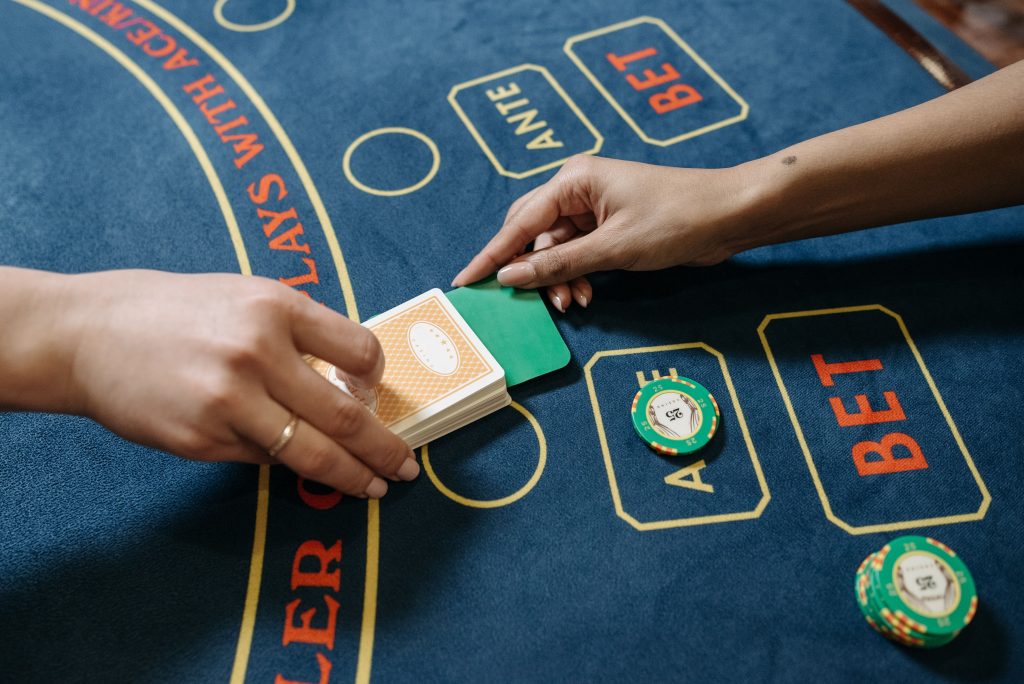
You sit down, buy some chips, and wait for the cards to fall. The basic objective of blackjack never changes from one seat to the next, yet the actual math governing your session can shift dramatically based on tiny details printed right on the felt. Recognizing these subtle variations is what separates a mathematically sound session from a rapid depletion of your bankroll. The house edge isn’t a fixed number; it flexes up and down depending on the specific rule set the venue chooses to enforce.
The Payout Ratio: 3-to-2 vs. 6-to-5
The single most significant rule variation you will encounter dictates how much a natural blackjack pays out. For decades, the standard payout for hitting twenty-one on your first two cards was 3-to-2. In recent years, many venues have shifted to a 6-to-5 payout structure, drastically altering the house edge in the process. This seemingly minor tweak increases the house advantage by nearly 1.4%, which is massive in a game where the baseline edge is usually under 0.5%.
Understanding the real-world mathematical impact of this payout difference helps clarify why seasoned players actively avoid modified tables.
- A $100 bet at 3-to-2: Landing a natural twenty-one yields $150 in pure profit.
- A $100 bet at 6-to-5: The exact same hand yields only $120 in profit.
- The long-term drain: Over an evening of play, losing out on that $30 every time you hit a natural blackjack quickly drains your potential winnings and erodes your bankroll.
Dealer Rules: Hitting or Standing on Soft 17
Another crucial factor involves how the dealer is required to handle a soft 17—a hand totaling seventeen that includes an Ace acting as an eleven. Some tables require the dealer to stand on all seventeens, while others force them to hit on a soft 17. When the dealer is forced to hit, the house edge increases by about 0.22%. It gives the dealer a free chance to improve a mediocre hand and reduces the likelihood that you will win by watching the dealer bust.
If you prefer to carefully review these mandates from home, playing a few hands at nvcasino online allows you to check the exact table limits and dealer restrictions before you commit your bankroll. Finding a game where the dealer stands on a soft 17 is always the better play for your long-term odds, regardless of where you sit down.
Doubling Down and Splitting Variations
The freedom you have to manage your own hand also plays a heavy role in determining the odds. Venue managers know that giving players fewer options directly increases the house edge.
Doubling Restrictions
A highly favorable table allows you to double down on any two starting cards. If you hold a soft 13 or a soft 18 against a weak dealer upcard, doubling down is the mathematically correct move. However, restrictive tables only allow doubling on hard totals of 9, 10, or 11. Taking away your ability to double on soft hands boosts the house edge by about 0.09%.
Resplitting Aces
Splitting Aces is a powerful move, but you usually only get one additional card per Ace. If that card is another Ace, you are stuck with a frustrating hand of twelve—unless the table allows resplitting. Tables that permit you to split Aces up to three or four times are incredibly rare but reduce the house edge by an additional 0.08% when you find them.
Surrender Options
Surrender is a highly misunderstood mechanic that allows you to forfeit half your bet and fold your hand immediately after the initial deal. While it might feel counterintuitive to give up money without even trying to win, utilizing this rule correctly saves you cash over time.
Recognizing the specific scenarios where giving up half your bet mathematically preserves your bankroll involves understanding dealer probability.
- Facing a Dealer Ace: When you hold a hard 16 and the dealer shows an Ace, surrendering is the optimal move to minimize your expected statistical losses.
- Facing a Dealer Ten: Holding a hard 15 against a dealer’s ten-value card is mathematically disastrous, making the half-bet forfeiture the smartest play.
- Early vs. Late Availability: Early surrender lets you fold before the dealer checks for blackjack, offering massive player value, whereas late surrender only allows folding after the dealer confirms they do not have twenty-one.
The Deck Count Impact
The number of decks resting in the shoe slightly alters the probabilities of drawing specific cards. Single-deck games offer the lowest inherent house edge because tracking the likelihood of a ten-value card appearing is noticeably easier. However, true single-deck games with favorable rules are extremely difficult to find today.
As venues add more decks, the house edge creeps upward. Moving from one deck to two decks jumps the house edge by about 0.35%, while moving to a standard six-deck shoe adds another 0.2%. More decks simply mean fewer player blackjacks overall.
Finding the Right Table
Before pulling out your wallet, always take a moment to read the rules printed in plain text on the table. A game offering 3-to-2 payouts, a dealer standing on soft 17, and the freedom to double down on any two cards creates a highly favorable environment. Conversely, sitting blindly at a 6-to-5 table with heavily restricted doubling rules puts you at an immediate disadvantage. The game might look identical on the surface, but the underlying mathematics dictate two completely different outcomes.